US + UK context The ideas here apply in both the US and UK. Specific products, rates, and rules differ by country, so treat the examples as illustrations rather than local advice.
Borrowing money has a bad reputation, and it's easy to see why — debt can feel like a weight that follows you around. But not all debt is created equal. Some borrowing can move your life forward, while other borrowing quietly works against you. That's the idea behind the popular labels good debt and bad debt.
In this guide we'll unpack what those labels really mean, look at the typical features of each, and compare them side by side. Most importantly, you'll get a short set of questions you can ask about any loan — so instead of memorising which debts are "good" and which are "bad," you can judge a borrowing decision for yourself. We'll use the dollar sign in the examples, but the same thinking works in any currency.
The basic idea: does the debt build or drain?
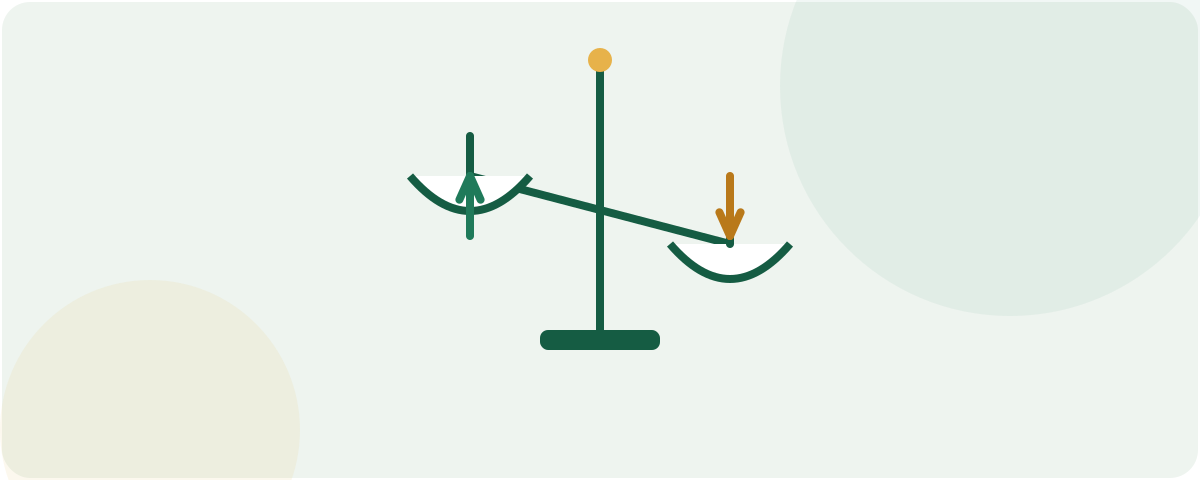
At its heart, the difference is simple. Good debt helps you build wealth or increase your income over time. It's borrowing that buys something likely to be worth more later, or that boosts your ability to earn. Bad debt does the opposite: it drains your money, usually to pay for things that lose value or that you use up and forget.
Picture two hypothetical borrowers who each take on $2,000 of debt. The first puts it toward something that grows in value or lifts their earning power; years later, they have something to show for every payment. The second spends it on everyday purchases that are long gone by the time the balance clears — and, thanks to interest, ends up repaying well over the original $2,000. Same amount borrowed, very different outcomes.
Why the labels help (but aren't absolute)
"Good" and "bad" are handy shortcuts. They give you a quick gut-check before you sign anything and a simple way to weigh the trade-offs. For a beginner especially, they're a great place to start.
That said, they're a framing, not a rigid rule — and context matters enormously. Even textbook "good" debt can turn bad if there's too much of it or the payments simply don't fit your budget. A home loan is often held up as good debt, but one that stretches you so thin you can't cover the rest of your life is a problem, not an asset. On the flip side, borrowing that looks "bad" on paper can occasionally be the sensible choice — for example, leaning on a card in a genuine emergency with no other option. So treat the labels as a useful lens, and always look at your own numbers underneath them.
What "good" debt usually looks like
Good debt tends to share a few features. It's typically lower-interest, it buys something that holds or grows in value or increases your earning power, and the payments are manageable within your normal budget. Notice the word typically — these are tendencies, not guarantees.
A few common examples people point to:
- A mortgage. Property can hold or grow in value over the long run, and either way you need somewhere to live. A home loan you can comfortably afford is a classic example of borrowing that can work in your favour.
- A student loan for a worthwhile qualification. Education that meaningfully lifts your earning power can pay for itself over a career. Student-loan systems differ a lot from one country to another — including how repayment works and how forgiving the terms are — so the details depend on where you live. The principle, though, is universal: borrowing to boost your future income can be money well spent.
- A sensible business loan. Borrowing to start or grow a business that generates income can be good debt — provided the plan is realistic and you could handle the repayments if things start slowly.
The common thread is that you're left with something of lasting value: an asset, a skill, or an income stream that outlives the loan.
What "bad" debt usually looks like
Bad debt tends to be the mirror image. It's usually high-interest, it funds things that lose value or get used up, and the payments can drag on long after whatever you bought has lost its shine. The classic warning sign is paying a lot in interest for something that gave you little lasting benefit.
Common examples include:
- Credit card balances carried month to month. Used carefully and paid off in full, a card is just a convenient way to pay. Carry a balance, though, and the interest can build quickly — turning ordinary purchases into something you're still paying for long after you've forgotten them.
- Payday-type loans. Very short-term, high-cost borrowing can trap people in a cycle where each repayment leaves them short again, so they borrow once more.
- Financing wants you can't really afford. Borrowing for the latest gadget, a lavish holiday, or an upgrade that's out of reach often means the item has lost much of its value — or is long gone — while the debt lingers.
If you're already juggling this kind of balance, don't be hard on yourself — most of us have been there. The useful next step is having a plan to clear it; our guide to paying off debt with the snowball vs. avalanche methods walks through two popular approaches.
Good debt vs. bad debt at a glance
Here's a simple side-by-side that sums up the tendencies. Remember these are general patterns — real-life debts can land anywhere on the spectrum.
| Feature | "Good" debt tends to be… | "Bad" debt tends to be… |
|---|---|---|
| Interest | Typically lower | Usually high |
| What it buys | An appreciating asset or greater earning power | Things that lose value or everyday consumption |
| Effect over time | Can build wealth or income | Drains money and can be hard to escape |
Most borrowing isn't purely one or the other. A reasonable car loan, for instance, sits somewhere in the middle: a car usually loses value, yet it may be exactly what you need to get to work and earn a living. That's why the label alone isn't enough — it pays to judge each debt on its own merits.
How to judge any debt: four questions
Instead of memorising lists, you can size up almost any loan by asking yourself four plain questions before you borrow:
- Can I comfortably afford the payments? Not just this month, but through a lean stretch too. If a payment only works when everything goes perfectly, that's a warning sign. This is where a clear budget is invaluable — it shows you at a glance whether a new repayment fits.
- Is the interest reasonable? Lower-interest borrowing leaves more of your money for you. When the rate is steep, the total cost can dwarf whatever you bought.
- Does it buy lasting value? Will you still be benefiting from this — an asset, a skill, an income — long after the loan is repaid? Or will it be gone while the bill remains?
- What's my exit plan? Know how and when the debt gets cleared before you take it on. "I'll figure it out later" is how manageable borrowing becomes a burden.
If a debt passes all four, it's likely working for you. If it stumbles on several, it's worth pausing — even when it's a type of borrowing people usually call "good."
That last point matters: too much of even good debt is still a risk. A sensible mortgage is one thing; piling several large loans on top of one another can leave you fragile the moment your income dips or costs rise. Good debt earns its label only while it stays comfortably affordable.
It's also worth remembering how borrowing ties into the rest of your money. Handling debt well — borrowing thoughtfully and paying on time — supports your credit score, which can make future borrowing cheaper. And every dollar you're not sending to unnecessary interest is a dollar that can go toward your goals instead. Once your debts are under control, that freed-up money is what lets you start building the future you want.
The bottom line
Good debt tends to build something — wealth, an asset, or your earning power — while bad debt tends to drain your money on things that don't last. Good debt is usually lower-interest and affordable; bad debt is usually high-interest and pays for what's quickly gone. Those labels are a helpful starting point, but they're not the whole story: even good debt can turn risky if there's too much of it, and affordability is what really decides.
So rather than forcing every loan into a rigid box, run it through the four questions — can I afford the payments, is the interest reasonable, does it buy lasting value, and what's my exit plan? Do that, and you'll keep your borrowing working for you rather than against you. That's the whole goal: use debt as a tool that moves your life forward, and stay cautious with anything that just holds you back.
Sources & further reading
The explanations and examples in this guide are our own. To keep them accurate, and to give you trustworthy places to read more, we drew on official government and regulatory resources. These are good, impartial starting points if you want to confirm the details for your own country:
- Consumer Financial Protection Bureau (CFPB) Consumer guidance on budgeting, saving, borrowing, and credit
- MoneyHelper (UK, government-backed) Free, impartial money guidance